
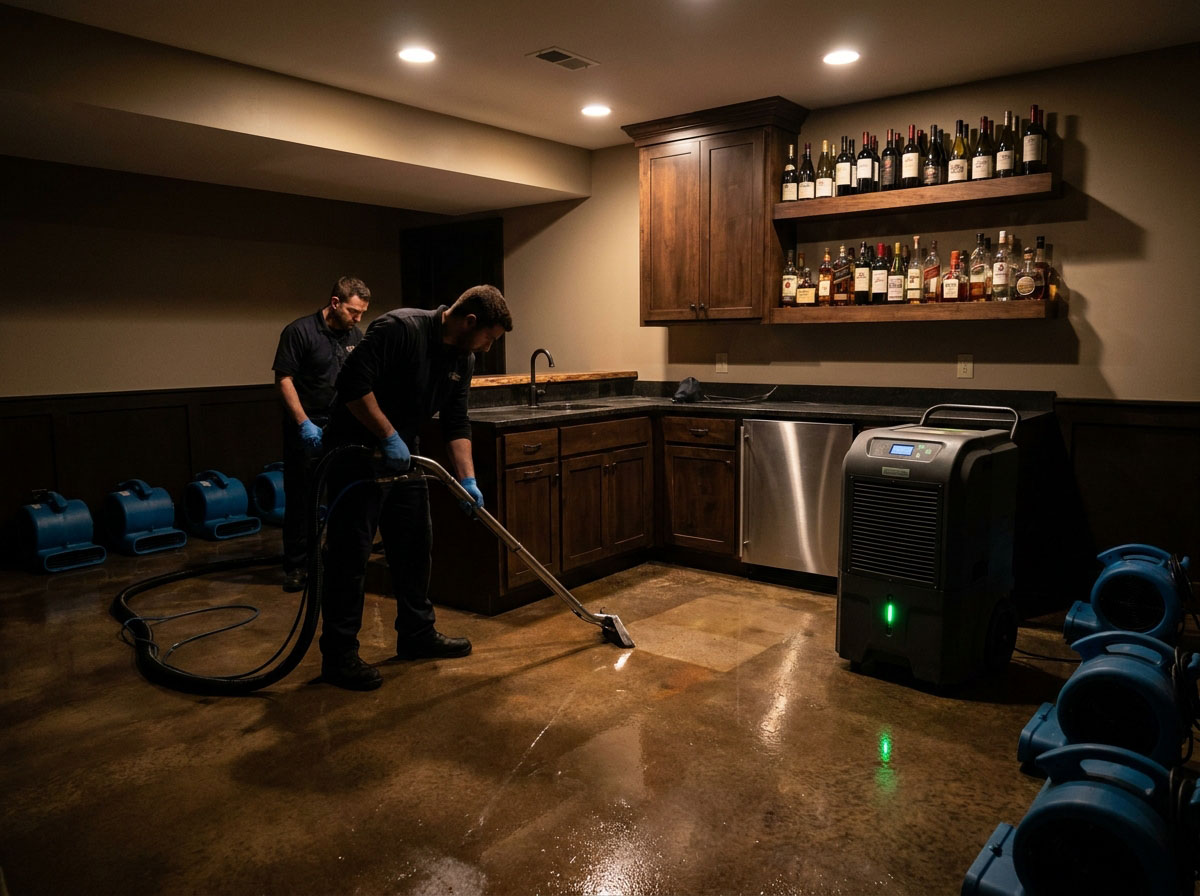


⚡ TL;DR: Professional water extraction services in Nassau County help homeowners effectively remove moisture, prevent mold growth, and protect property from the unique environmental risks found within our coastal region.
📋 What You’ll Learn
Discover why professional water extraction is critical for safeguarding your Nassau County home. This guide explains how rapid, expert intervention prevents structural decay and costly mold remediation after a flooding event.
- Master the physics of moisture migration to understand how water travels through walls and floors, hidden from sight, and why specialized tools are required for a complete, thorough dry.
- Compare consumer gear to industrial systems to see why store-bought shop vacuums cannot match the high-pressure extraction capabilities and deep-suction power of professional-grade restoration equipment used by local teams.
- Beat the forty-eight-hour mold deadline by prioritizing swift water removal, which remains the single most effective strategy to inhibit fungal growth and preserve the air quality of your home.
- Evaluate coastal climate restoration challenges, specifically how Nassau County’s unique humidity and salinity levels require customized drying protocols to prevent long-term material corrosion and persistent dampness issues later.
📖 Reading time: 7 min
✍️ Author expertise: Certified restoration professional with two decades of experience managing water emergencies in Nassau.
You wake up to the sound of water dripping where it absolutely shouldn't be, and suddenly your living room floor feels like a swamp. Most homeowners assume a quick pass with a shop vac or a few box fans will fix the mess, but that is a dangerous gamble that costs thousands in hidden structural damage.
Water is a silent, aggressive intruder that hides deep within your floorboards and behind drywall long after the surface looks dry. When you leave moisture trapped inside your home, you aren't just dealing with damp carpets; you are inviting toxic mold to set up shop in your walls.
Professional extraction is the only way to stop the clock on rot before it ruins your property value. Keep reading to discover why DIY methods often fail and what happens to your home when you hire pros to handle the job correctly.
The Hidden Physics of Water Migration in Nassau Homes
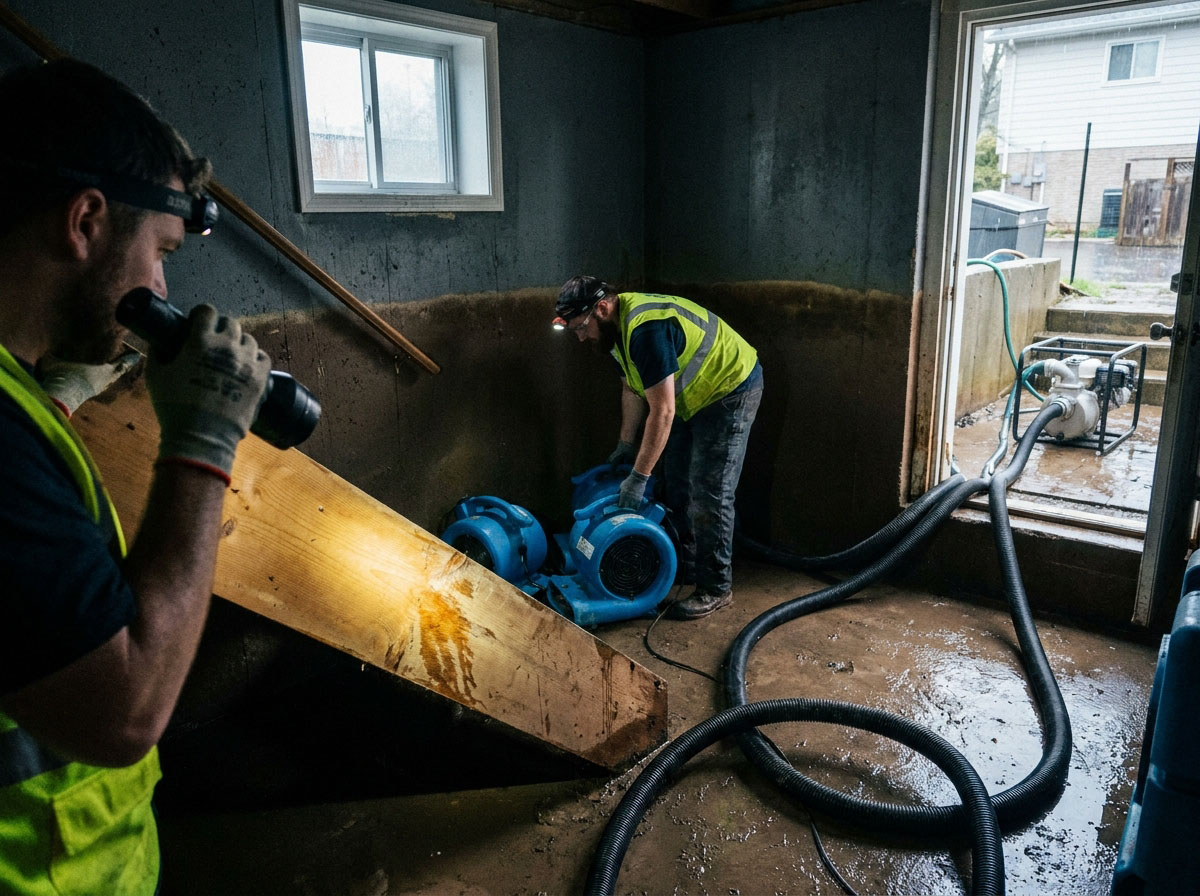
Water does not just sit on your floor. It follows the path of least resistance, aggressively moving through porous materials through a process known as capillary action. In a typical Nassau County home, water wicks upward into your drywall, travels laterally behind baseboards, and soaks into subflooring like a sponge.
You might think your floors are dry because the surface looks clear, but the structure beneath remains saturated. This moisture moves through your home in ways that are invisible to the naked eye:
- Wicking: Liquid travels vertically through porous materials like wood studs and drywall.
- Vapor Pressure: High moisture levels in one area force water molecules into drier, unaffected materials in other rooms.
- Gravity: Water settles into the lowest point of your joists, creating hidden pockets of decay that remain wet for weeks.
Because of this physics-based migration, your home essentially becomes a closed-loop system of trapped humidity. Without industrial-grade intervention, that moisture does not just evaporate; it embeds itself into your foundation and framing. Ignoring this silent movement is the fastest way to turn a simple cleanup job into a massive, expensive renovation project.
Why Household Equipment Falls Short Against Professional Extraction Systems
The shop vac sitting in your garage is a fine tool for cleaning up a spilled bucket, but it is woefully underpowered for a flooded room. These retail machines possess limited lift capacity, meaning they only pull up the water sitting on the very top of your carpet.
They cannot reach the moisture hiding in the padding, the subfloor, or the concrete slab beneath your home. When you rely on these weak tools, you leave behind gallons of water that will inevitably lead to costly secondary damage.
The Industrial Advantage
Professional restoration crews use truck-mounted extraction units that generate massive suction power. These machines pull water through layers of flooring that consumer-grade gear cannot touch.
Here is why your DIY setup is leaving you exposed:
- Standard shop vacs lack the airflow volume required to dry deep structural materials.
- Retail fans merely circulate moist air rather than removing it from your home.
- Dehumidifiers bought at hardware stores lack the grain depression capacity to stop rapid mold growth.
- Professional systems maintain a vacuum seal to pull moisture from deep within porous drywall and wood.
You might see the surface looking dry, but the hidden saturation remains a ticking time bomb. High-velocity air movers and industrial-grade desiccant dehumidifiers work in tandem to pull that trapped humidity out of your building materials. Relying on store-bought equipment is essentially putting a bandage on a deep wound; you are covering the mess without ever fixing the actual problem.
The Critical Timeline: Preventing Mold Growth Within the First 48 Hours
Time is your biggest enemy when water strikes. Mold spores are microscopic and exist naturally in the air, but they only need a damp, undisturbed surface to transform into a full-scale colony.
You have a narrow window of 48 hours before dormant spores take root. Once they start feeding on cellulose in your drywall or carpet backing, the damage moves from a simple cleanup to a costly remediation nightmare.
If you wait, the situation shifts from physical water removal to biohazard management. You can avoid this by following these urgent steps:
- Remove standing water immediately to stop evaporation rates.
- Deploy industrial-grade dehumidifiers to pull moisture from the air.
- Apply antimicrobial treatments to kill spores before they become airborne.
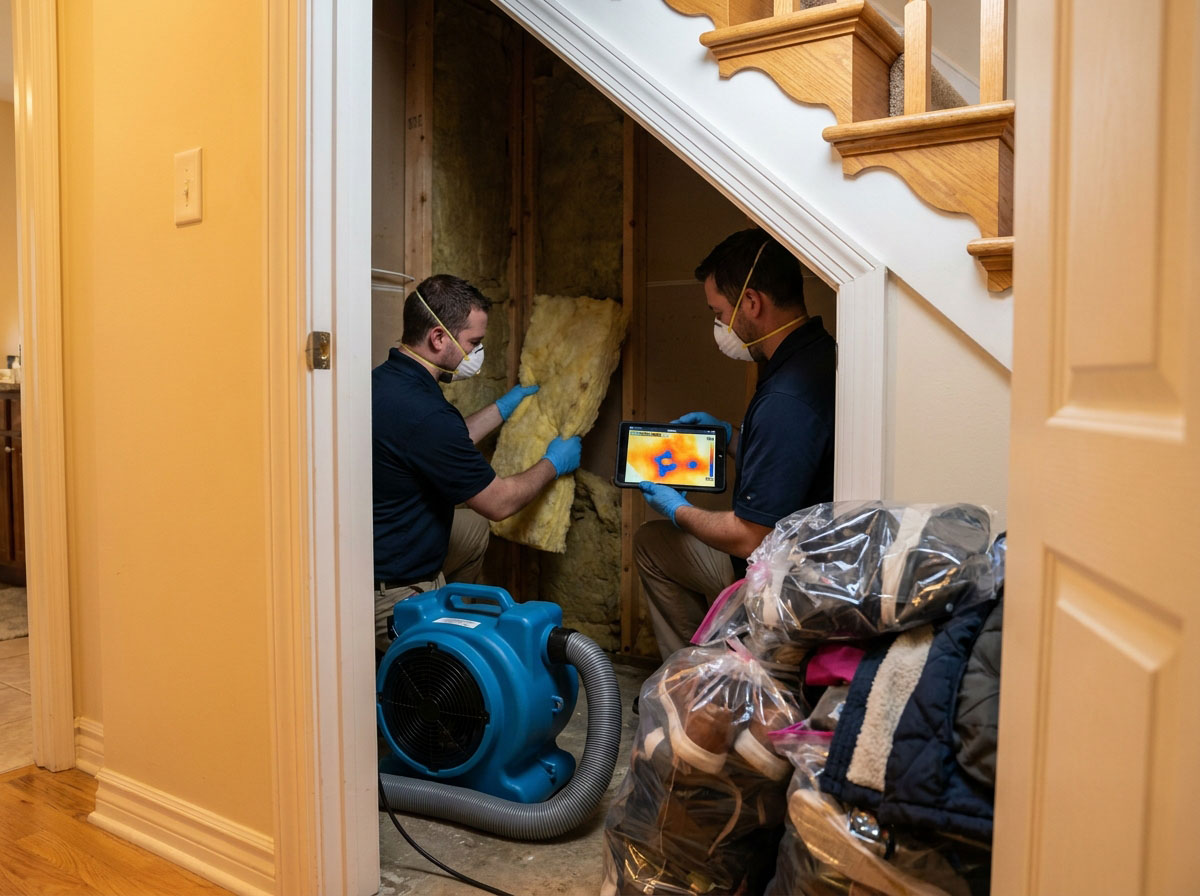
- Monitor moisture content in wall cavities with specialized hygrometers.
Surface drying is a total illusion. Even if your flooring feels dry to the touch, the subfloor and structural framing beneath may still be at saturation levels, which provides the perfect environment for hidden fungal growth.
Professional technicians rely on dehumidification cycles to dry out the building materials themselves, not just the room air. By controlling the interior climate, we starve the mold of the moisture it needs to survive, effectively stopping the biological clock on your property.
Nassau County Waterfront Risks: How Salinity and Humidity Complicate Drying
Living along the Nassau County coast brings beautiful views, but it creates a brutal environment when water damage strikes. The salt content in water intrusion from storm surges or coastal flooding acts as a hygroscopic agent, which essentially means it pulls moisture directly from the air into your home materials.
Because salt crystals remain in your drywall, wood, and carpets long after the water recedes, they continue to trap ambient humidity. This makes traditional drying methods almost useless, as the building materials are perpetually damp no matter how many fans you point at them.
Why Coastal Moisture Is Different
Salt contamination isn't just an annoyance; it is a chemical reaction that accelerates structural decay. Standard extraction tools simply cannot flush out these mineral deposits.
- Salt residue prevents wood from reaching a state of equilibrium with the air.
- Residual moisture creates a perpetual feeding ground for mold spores.
- High humidity levels in our coastal region make evaporation naturally slower.
Our professional drying systems go beyond surface extraction. We utilize specialized dehumidification technology that is calibrated for the high dew points typical of a Long Island summer. If you rely on basic shop vacuums or store-bought dehumidifiers, you are ignoring the microscopic salt layer that will inevitably lead to rot or secondary water damage down the line.
Real-World Restoration: A Case Study of a Burst Pipe Emergency in Garden City
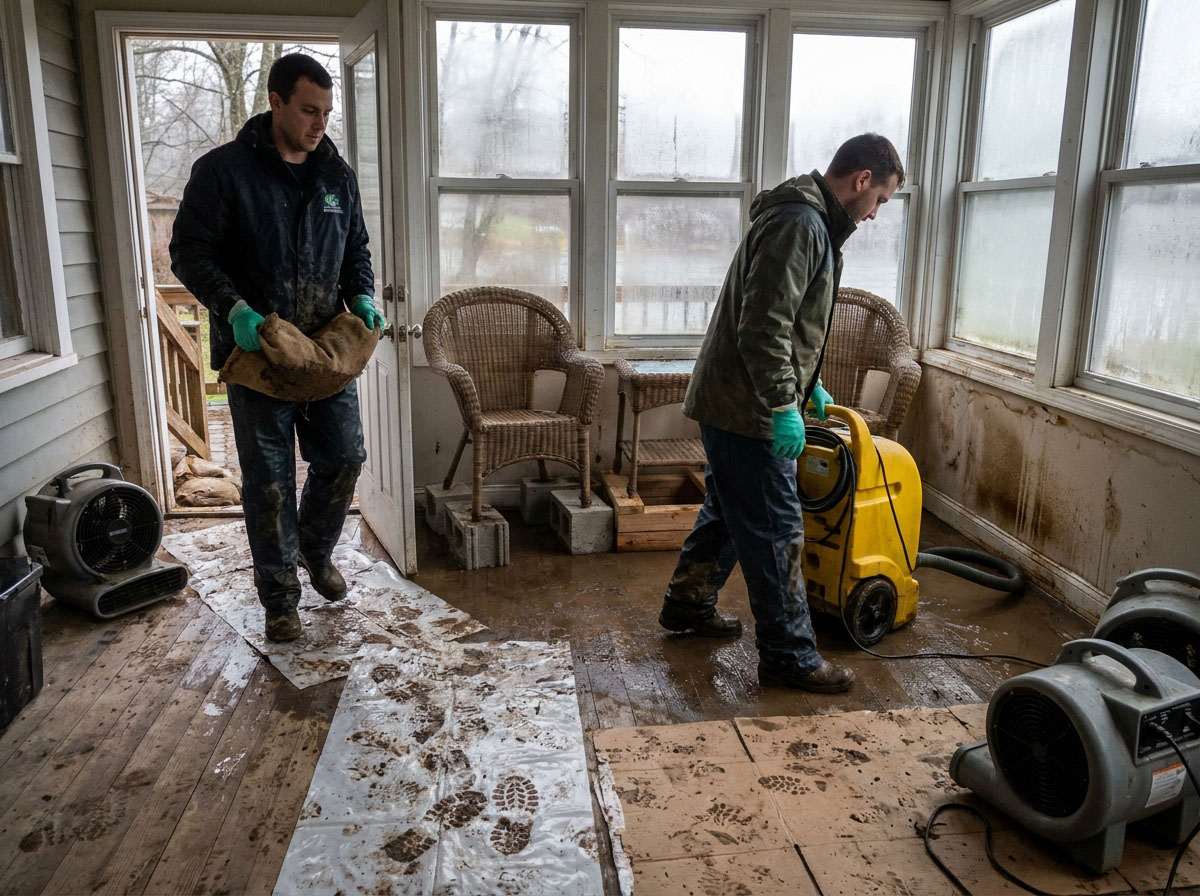
Last winter, a client in Garden City faced a catastrophic pipe burst at three in the morning. By the time they discovered the flooding, the water had already soaked into the hardwood flooring and traveled behind the baseboards into the wall cavities.
They initially tried using a standard shop vacuum and a couple of space heaters. It looked dry on the surface, but the hidden saturation was ticking away like a time bomb.
When our team arrived, we used specialized moisture mapping to prove the subfloor was still holding gallons of standing water. Without our industrial-grade extraction systems, that home would have developed severe mold blooms within a week.
The Restoration Process in Action
We bypassed the DIY surface cleaning and went straight for the source. We utilized high pressure extraction to pull water out of the flooring fibers while simultaneously venting the wall cavities.
- Phase One: Rapid extraction of standing water to prevent floorboard warping.
- Phase Two: Installing low-grain refrigerant dehumidifiers to strip moisture from the air.
- Phase Three: Monitoring the drying process until structural materials returned to a safe moisture content level.
The result was a total recovery without the need for expensive reconstruction. By acting fast and using professional-grade gear, we kept the damage confined to a single room instead of letting it migrate throughout the entire house.
Equipment Capabilities and Restoration Benefits: A Comparative Table
When water strikes your Nassau home, the tools in your garage simply do not measure up. While a standard shop vacuum picks up surface liquid, it lacks the industrial suction power required to pull water from deep within floor pads and subflooring.
Professional restoration teams deploy truck-mounted extraction units that operate at significantly higher lift and airflow capacities. This equipment is specifically designed to reach moisture trapped behind walls and under baseboards, where traditional home fans would only spread the humidity further.
| Feature | Household Shop Vac | Professional Extraction Unit |
|---|---|---|
| Suction Power | Low (Surface only) | High (Deep penetration) |
| Drying Speed | Days or Weeks | Hours |
| Mold Prevention | Minimal | High |
| Moisture Detection | None | Advanced Thermal Imaging |
| Structural Protection | Risk of warping | Preserves integrity |
Using the right machinery determines whether you face a quick cleanup or a total gut renovation. By choosing heavy-duty systems, experts can effectively reset the moisture levels in your home to prevent the porous materials from breaking down.
Consider the core benefits of professional gear:
- High-velocity air movers that force moisture to evaporate from tight crevices.
- Commercial-grade dehumidifiers that pull water vapor directly out of the air.
- Moisture sensors that verify when the structure is truly dry rather than just appearing dry on the surface.
Final Words
When water strikes your Nassau home, the clock is not just ticking, it is screaming. You can try to dry your floors with household tools, but you are only treating the symptoms while the real damage thrives underneath your feet.
Professional Water Extraction Services remove moisture from places you cannot reach and surfaces you cannot see. This is the difference between a minor cleanup and a complete structural failure of your home.
Consider these points before you decide to go the DIY route:
- Hidden saturation: Water travels through drywall and subflooring using capillary action, creating deep pockets of rot.
- Air quality: Trapped moisture acts as a breeding ground for harmful spores, which can lead to respiratory issues for your family.
- Insurance compliance: Most policies require professional documentation to prove the property was properly dried to avoid future claim denials.
Do not gamble with the structural integrity of your property. If your home has been compromised by a pipe burst, flooding, or a leaky roof, reach out to our team immediately. Getting it done right the first time is the only way to protect your investment and ensure your living space stays dry, safe, and sound.
People Also Ask
How soon after a water leak should I call for professional extraction?
You should contact a professional immediately because water damage progresses rapidly. Addressing the issue within the first 24 to 48 hours is critical to stop the spread of mold growth and permanent structural degradation.Why is store bought equipment insufficient for basement flooding in Nassau County?
Residential shop vacuums lack the suction power and airflow needed to extract moisture trapped deep within subflooring or wall cavities. Professional restoration firms use industrial grade pumps and dehumidifiers that remove water at a molecular level to prevent hidden secondary damage.Does the proximity to the coast affect water damage restoration in Nassau County?
Yes, the high humidity and salinity levels common in Nassau County can slow down the natural evaporation process significantly. Professional equipment is specifically calibrated to overcome these environmental factors to ensure your home returns to a safe moisture level.Can I dry out a water damaged room using just fans and heaters?
Using household fans and heaters often circulates moisture into the air without removing it, which creates a prime environment for microbial growth. Professionals use dehumidification systems that pull moisture out of the air and materials to achieve a stable equilibrium.What are the primary risks of leaving standing water in a home?
Standing water compromises the structural integrity of your flooring and drywall while creating immediate health risks. Even small amounts of trapped moisture can lead to hidden decay that requires expensive repairs if not addressed by trained restoration specialists.Need Water Damage Restoration Services?
We provide immediate water damage mitigation and restoration services to property owners throughout Nassau County and surrounding communities. Our rapid response teams stabilize your home or business to prevent further damage and restore your property to pre-loss condition (11501, 11530, 11550, 11590, 11001).
Request Project Estimate