


⚡ TL;DR: This guide helps Nassau County homeowners understand the causes of basement water damage while providing actionable mitigation strategies to protect structural integrity and prevent dangerous mold growth effectively.
📋 What You’ll Learn
Living on Long Island presents unique challenges for homeowners. This guide breaks down why basements in Nassau County are prone to flooding and how you can protect your property from damage.
- Identify geological risks early by understanding how our high water table and storm surges specifically threaten the structural integrity of your home foundation during heavy rain events.
- Detect warning signs quickly so you can distinguish between minor moisture buildup and severe structural decay before significant mold growth compromises the air quality in your living space.
- Master emergency mitigation steps to take immediate action when a sump pump fails or a pipe bursts, preventing widespread water accumulation and long term damage to your basement.
- Implement future proof strategies that safeguard your basement against recurring moisture issues, ensuring your property remains dry and secure throughout the unpredictable Nassau County storm seasons ahead.
📖 Reading time: 7 min
✍️ Author expertise: Nassau County restoration professional with two decades of local water damage field experience.
You wake up in the middle of the night to the distinct, sickening sound of water sloshing against your basement stairs. By the time you flip the switch, your finished game room or storage area is already a soggy, ruined mess that smells like a swamp.
Most homeowners in Nassau County think they are safe until the local water table pushes back, or a heavy storm exposes the cracks in their foundation they never knew existed. You are not just dealing with a puddle; you are fighting a ticking clock that threatens the structural integrity of your entire property.
Ignoring the dampness is a financial death sentence for your home. If you want to stop the rot and prevent thousands of dollars in hidden repair costs, here is exactly what you need to know about protecting your basement.
Nassau County’s Unique Geological Vulnerabilities and Water Table Risks
Living on Long Island means you are technically residing on a giant sandbar. Because of our porous, sandy soil composition, groundwater moves differently here than it does in upstate regions or rocky areas of the country.
When heavy rain hits, the water table often rises faster than your basement floor can handle. This creates hydrostatic pressure, which acts like a relentless underground force pushing water through the smallest microscopic pores in your concrete foundation.
Understanding why your basement is at risk requires looking at the specific factors that define our local geology:
- Sandy Soil Drainage: While sand drains well, it also allows water to accumulate rapidly against your foundation walls during intense storm surges.
- High Water Table: In many low-lying towns across Nassau County, the water table sits uncomfortably close to the surface, leaving little room for error during seasonal shifts.
- Coastal Proximity: Our proximity to the Atlantic Ocean and the Long Island Sound means that tidal surges often trap groundwater, preventing it from draining away from your home.
You might think your basement is dry because you don't see standing water, but moisture is often seeping in slowly. Invisible dampness is the precursor to major damage. Without proactive attention to how your home interacts with this specific soil environment, your basement will eventually succumb to the pressure of the rising tide.
Why Foundation Cracks and Sump Pump Failures Trigger Rapid Destruction
Most Nassau County homeowners view their basement as a solid concrete bunker, but the reality is far more porous. Your foundation is under constant pressure from hydrostatic forces, and even a hairline crack acts like a straw sucking groundwater into your home during a heavy rain.
When the sump pump stops humming, the disaster shifts from a minor nuisance to a total loss in a matter of hours. The following breakdown shows how these two specific failure points dictate the speed of destruction.
| Failure Point | Immediate Consequence | Long Term Risk |
|---|---|---|
| Foundation Crack | Slow seepage and damp walls | Structural instability |
| Sump Pump Dead | Standing water accumulation | Total basement flood |
| Drainage Clog | Water backup at seams | Foundation erosion |
| Backflow Valve Fail | Sewage contamination | Health hazards |
You cannot afford to wait for a visible flood before taking action. Foundation cracks often hide behind drywall or heavy storage boxes, silently wicking moisture into your framing and insulation.
If your sump pump is older than five years or lacks a reliable battery backup, you are essentially gambling with your equity. Once water breaks through the perimeter, it targets the most vulnerable components of your home:
- Electrical wiring and outlets located near the floor level.
- Structural wood supports that lose load-bearing capacity when soaked.
- Expensive mechanical systems like boilers and water heaters.
A failure in your perimeter drainage or pumping system doesn't just damage the basement. It starts a chain reaction that compromises the entire stability of your foundation footing.
Warning Signs vs. Necessary Immediate Actions
Most Nassau County homeowners don't see the disaster coming until the carpet squishes under their feet. By then, the damage is already expensive.
You need to spot the red flags before the water reaches your valuables. Use this guide to identify threats and take decisive action immediately.
| Warning Sign | Immediate Action Required |
|---|---|
| Musty odor | Check for hidden leaks and increase ventilation |
| Efflorescence on walls | Seal foundation cracks from the inside |
| Sump pump cycling constantly | Test the float switch and check discharge pipe |
| Water pooling near base | Clear gutters and extend downspouts away |
| Buckling floor tiles | Call a moisture specialist for structural assessment |
If you see white, powdery mineral deposits on your basement walls, that is not just dust. That is efflorescence, a clear sign that water is pushing through your masonry.
Take these steps the moment you detect trouble:
- Shut off electrical power to the basement if standing water exists.
- Locate the source of the entry, such as a cracked window or pipe.
- Clear out your belongings to prevent secondary mold growth.
- Contact a professional restoration team to begin professional dehumidification.
Do not wait for the sun to come out. Water behaves like a silent invader; it moves through studs and insulation long before you see the visual decay.
Speed is your best defense against permanent structural damage. If you wait, you are simply paying for more extensive repairs later.
The Hidden Dangers of Mold Growth and Structural Decay in Sub-Surface Spaces
Once water settles into your basement, it becomes a biological ticking time bomb. Nassau County humidity levels act as a catalyst, allowing mold spores to bloom in as little as 24 to 48 hours.
You might think a quick wipe-down is enough, but mold roots reach deep into drywall, insulation, and wooden floor joists. If you ignore these early signs, you are inviting permanent structural decay that can compromise the safety of the floors above you.
Recognizing the Invisible Threat
Mold is not always visible to the naked eye. Often, the damage is happening behind your walls, silently eating away at the support beams that keep your home standing.
- Musty, earthy odors that refuse to leave the basement.
- Visible water stains creeping up the lower sections of your walls.
- Peeling wallpaper or bubbling paint near the baseboards.
- Unexplained physical symptoms like headaches or respiratory irritation when spending time downstairs.
When moisture lingers, it degrades the building materials themselves. Concrete starts to spall, wooden frames soften, and metal fasteners begin to corrode at an alarming rate. Neglect this for too long and you will be looking at a massive reconstruction project rather than a simple repair.

Transforming a Flooded Oceanside Basement into a Dry Sanctuary
Recently, we took on a property in Oceanside that looked like a total loss. The homeowner walked into an inch of standing water after a massive storm surge overwhelmed their aging sump system.
The space was a finished basement, meaning the moisture had already wicked up into the drywall and soaked the subfloor. Time was of the essence to prevent the framing from turning into a breeding ground for toxic mold.
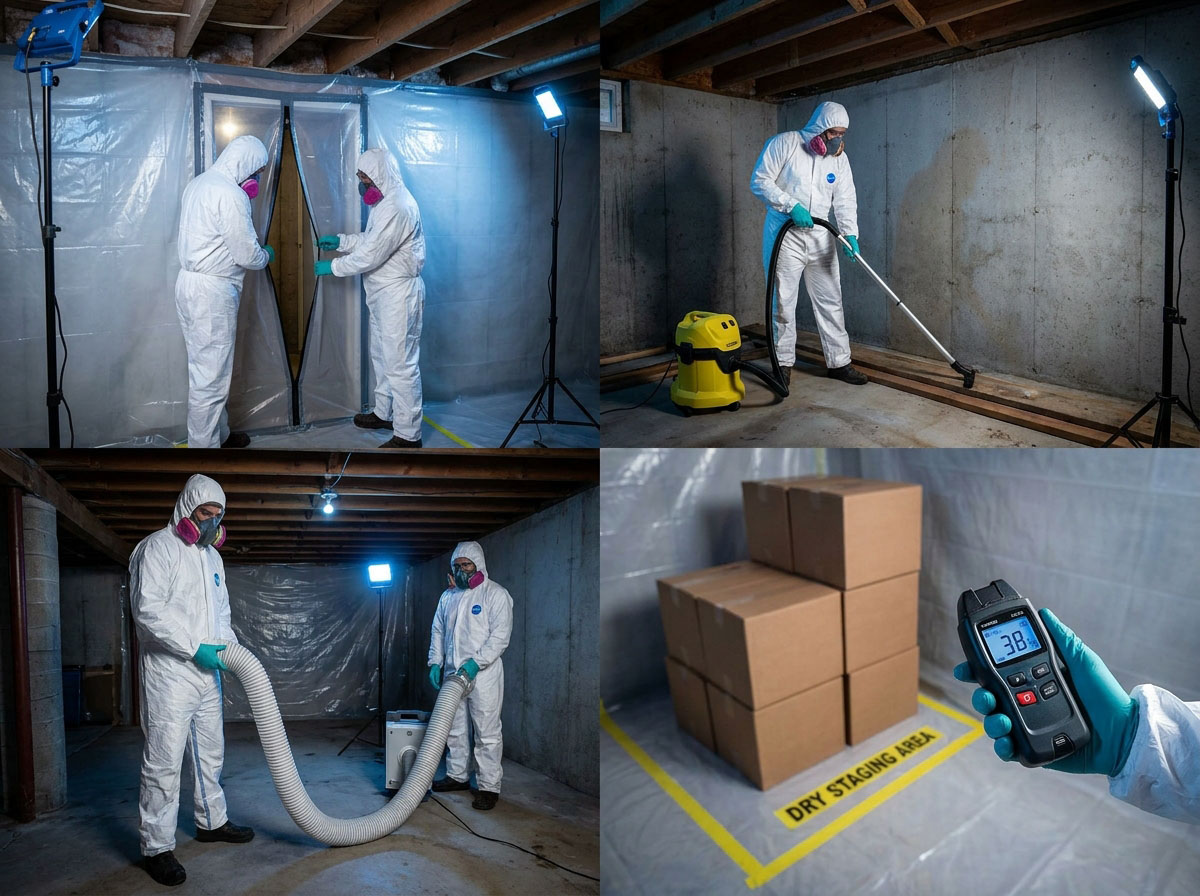
We didn't just dry it out; we performed a surgical restoration to ensure the basement would stay bone dry even during the next high tide. Here is the breakdown of the transformation steps:
- Extraction of standing water and professional-grade industrial dehumidification.
- Removal of non-salvageable materials to stop rot in its tracks.
- Installation of a secondary battery-operated sump pump for fail-safe protection.
- Application of specialized waterproof sealants to foundation seams.
- Reconstruction with water-resistant materials and moisture-proof flooring.
The result was a total night-and-day difference. What was once a liability that devalued the entire home is now a clean, safe sanctuary that actually adds equity to the property.
You do not have to settle for a basement that smells like a pond or feels damp to the touch. By addressing the root cause of the flood rather than just the symptoms, we turned a major disaster into a long-term home improvement project.
Essential Mitigation Strategies to Future-Proof Your Home Against Storm Surges
Living in Nassau County means you are constantly dancing with the Atlantic and the Long Island Sound. Storm surges do not care about your renovation budget; they only care about finding the path of least resistance into your home.
You must stop waiting for the next weather report to panic. Taking proactive steps today is the only way to avoid a catastrophic bill tomorrow.
| Mitigation Strategy | Impact Level |
|---|---|
| Install Backwater Valves | High |
| Upgrade Sump Pump Battery Backup | High |
| Apply Professional Sealants | Medium |
| Regrade Exterior Soil | Medium |
| Clear Downspouts Regularly | Low |
Start by auditing your external drainage systems. Ensure all gutter extensions carry water at least ten feet away from your foundation wall.
If water pools near your house, the ground eventually saturates like a sponge. That pressure will force moisture directly through the concrete, regardless of how well you think your basement is sealed.
Proactive Hardening Techniques
Consider these upgrades to create a genuine perimeter of defense around your property:
- Install a heavy duty battery backup for your sump pump so it continues running during power outages.
- Add check valves to your sewer lines to prevent local municipal backflow from entering your floor drains during heavy rain.
- Invest in flood vents if you live in a high risk coastal zone; these allow water to flow through the basement safely rather than pushing your foundation walls inward.
Finally, inspect the grade of your yard twice a year. You want the soil sloping away from the house at a pitch of six inches over every ten feet.
Water is persistent and opportunistic. By hardening your defenses now, you make your home a much less attractive target for the next big storm.
Final Words
Your home is likely your biggest investment, and your basement is its silent foundation. Do not wait for the next heavy rain to see if your sump pump is actually doing its job.
If you see even a hint of moisture, take action immediately. Putting it off only invites toxic mold and rotting wood joists into your living space.
Take Control Before the Damage Spreads
Prevention is always cheaper than a total gut job. If you are worried about the state of your property, you should explore professional resources for Basement Water Damage mitigation.
Here are the non-negotiables for every Nassau County homeowner:
- Check your foundation walls for hairline cracks every time the season changes.
- Ensure your gutters are clear so that water drains far away from your exterior walls.
- Test your backup power source to keep that sump pump running during local outages.
You have the power to stop the destruction before it starts. Stay proactive, keep your home dry, and protect your property value from the ground up.
People Also Ask
Does homeowners insurance in Nassau County cover basement flooding?
Most standard homeowners insurance policies do not cover damage caused by rising groundwater or storm surges. You typically need a separate policy from the federal government to provide protection against these specific flood events.What are the first steps to take after discovering basement water in my home?
You should prioritize safety by shutting off the electricity and avoiding contact with standing water if power is still active. Contact a professional restoration team immediately to begin the water extraction process and prevent secondary damage like mold.How do I know if my basement foundation is compromised by water?
Look for signs such as persistent dampness, visible cracks in the concrete walls, or white powdery deposits known as efflorescence. If you notice these symptoms, it is essential to have a structural assessment to determine if your foundation has been weakened.Why is mold growth in Nassau County basements a major health concern?
High humidity levels combined with poor ventilation create an ideal environment for mold to thrive within 24 to 48 hours of water exposure. This can lead to significant indoor air quality issues and trigger respiratory problems for your family.How often should I inspect my sump pump in Nassau County?
We recommend testing your sump pump at least twice a year, especially before the spring thaw or heavy rain seasons. Ensuring your discharge pipe is clear and the float switch operates correctly is vital to preventing sudden basement flooding.Need Water Damage Restoration Services?
We provide immediate water damage mitigation and restoration services to property owners throughout Nassau County and surrounding communities. Our rapid response teams stabilize your home or business to prevent further damage and restore your property to pre-loss condition (11501, 11530, 11550, 11590, 11001).
Request Project Estimate